5 motets, 104 German secular pieces, 4 French secular pieces (2 without text), 1 Latin secular piece, 5 dances, 6 textless pieces = 125* + 1 dupli-cate = 126 (all fragmentary)
*Above summary excludes several unidentified fragments, some or all of which may be other parts for pieces already included in summary.
(Adam von Fulda)-1, A. Agricola-2, Appel-1, Arthopius-1, (Bar-bireau/Isaac/Obrecht)-1, Biscapff-1, (Blanckenmüller)-1, Botsch-1, (Brack)-1, (Braetel)-1, (Burckstaller)-1, (Dietrich)-1, (Ducis/ Maffoni)-1, (Förster)-5, (Frosch)-1, (Grefinger)-2, (Greitter)-4, (Heintz)-1, (Heugel)-2, (Hofhaimer)-3 +1?, (Isaac)-2 +1?, (Josquin)-1, Kniphoff-1, (Langenaw)-1, Lemlin-2, Orto-1, (Othmayr)-2, (Peschin)-1, (Puls)-1, (Reyter)-1, Russmann-2, (J. Schachinger I/Senfl)-1, (Schönfelder)-1, Senfl-12, (Sporer)-1, Stokhem? [Jo. Stacken]-1, (Stoltzer)-1, (Stoltzer/Wolff)-1, Susato -1, (A. Sylvanus/J. Wenck)-1, Valertiny [Valertiny alias Eccardi HaburgensisJ-1, (Wolff)-1, anon-54
123 fragmentary paper folios, originally 80 x 120, now of widely varying sizes (many are scraps only), recovered from binding of incunabulum Herbarius (Mainz, 1485). Apparently the only surviving remnants of a set of 4 or 5 partbooks. No foliation or pagination. Original numbering of pieces apparently extended to 201, judging from extant remnants (2 folios) of original index, which list pieces #119-201. Copied by one or two scribes. No initials or decoration. Watermarks: (1) resembles Briquet #11463; (2) resembles Briquet #12612; (3) resembles Briquet #3321 (SowL).
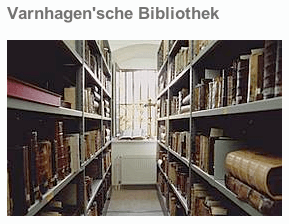
1544 (date in manuscript). Probably of Westphalian origin; perhaps copied in Soest or vicinity (Call); probably copied in Augsburg or Nuremberg (SowL). In late 16th century, partbooks disassembled and used in bindings of printed volumes, including the Herbarius. Latter book possibly acquired in Soest by Jobst Dietrich Varnhagen (1649-1717), member of prominent Westphalian family of clergymen; book eventually placed in Varnhagen family library at Iserlohn. Folios with music recovered from binding of Herbarius by Hans Heiland in 1955.
Census-Catalogue of Manuscript Sources of Polyphonic Music 1400-1550